


Elevate Your Space with Stunning Mediterranean Interior Design Ideas

Mediterranean interior design brings warmth, charm, and a relaxed elegance to any home. Inspired by the coastal regions of Southern Europe, this style combines natural materials, earthy colors, and timeless craftsmanship. If you want to transform your living space into a serene retreat that feels both inviting and stylish, Mediterranean design offers plenty of inspiration. This post explores practical ideas and key elements to help you create a Mediterranean-inspired interior that suits your taste and lifestyle.

Use Warm Earth Tones and Natural Materials
Mediterranean interiors often feature a palette inspired by the sea, sky, and landscape. Think warm terracotta, sandy beige, olive green, and deep blues. These colors create a cozy and grounded atmosphere.
Walls and floors: Use natural materials like stone, terracotta tiles, or textured plaster walls. These surfaces add authenticity and a tactile quality.
Wood accents: Incorporate exposed wooden beams, furniture made from reclaimed wood, or hand-carved details. Dark or weathered wood contrasts beautifully with lighter walls.
Textiles: Choose fabrics in natural fibers such as linen, cotton, or wool. Patterns can include subtle stripes or traditional Mediterranean motifs.
This combination of colors and materials creates a warm, inviting space that feels connected to nature.
Bring in Mediterranean-Inspired Furniture and Decor
Furniture in Mediterranean interiors tends to be sturdy, handcrafted, and functional. Look for pieces that combine comfort with rustic charm.
Seating: Opt for wrought iron or wooden chairs with plush cushions. A large, comfortable sofa in neutral tones anchors the living room.
Tables: Use wooden dining tables with a distressed finish or mosaic tile tops for an authentic touch.
Decorative elements: Add ceramic vases, hand-painted tiles, and wrought iron light fixtures. These details bring character and a sense of place.
Layering these elements creates a space that feels lived-in and welcoming.

Incorporate Natural Light and Outdoor Connections
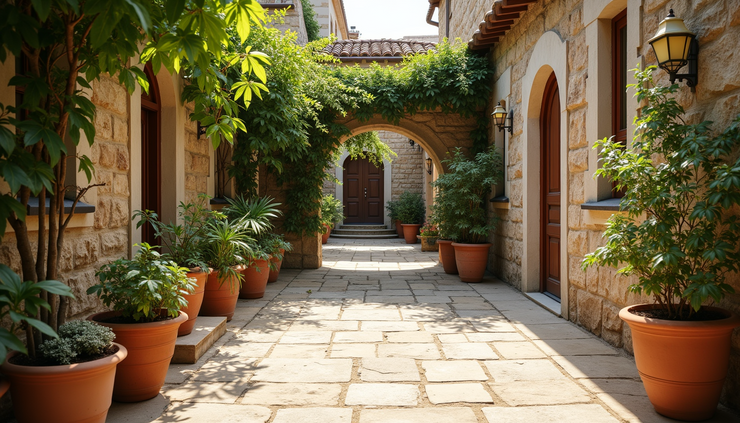
Mediterranean homes often emphasize a strong connection between indoor and outdoor living. Large windows, arched doorways, and open floor plans invite natural light and fresh air.
Windows and doors: Choose arched or shuttered windows to add architectural interest. Use light, airy curtains to soften the light without blocking it.
Outdoor spaces: Extend your design to patios or balconies with terracotta pots, climbing plants, and comfortable seating.
Plants: Olive trees, lavender, and succulents bring greenery and a Mediterranean feel indoors.
Maximizing natural light and blending indoor and outdoor spaces enhances the relaxed vibe of Mediterranean design.
Add Textural Contrast with Tiles and Fabrics
Texture plays a big role in Mediterranean interiors. Combining smooth surfaces with rougher textures adds depth and interest.
Tiles: Use colorful ceramic tiles for backsplashes, stair risers, or fireplace surrounds. Traditional patterns in blue, yellow, or green add vibrancy.
Rugs and cushions: Layer woven rugs and cushions with embroidered or patterned fabrics. These soften hard surfaces and add comfort.
Walls: Consider textured plaster or stucco finishes to add subtle variation.
This mix of textures keeps the space dynamic without overwhelming the senses.
Focus on Simple, Functional Layouts
Mediterranean design values comfort and practicality. Rooms should feel open and easy to navigate.
Furniture arrangement: Group seating to encourage conversation. Avoid clutter by choosing essential pieces.
Storage: Use built-in shelves or niches to display ceramics, books, or plants.
Lighting: Combine natural light with wrought iron chandeliers, lanterns, or wall sconces for a warm glow.
A well-planned layout supports everyday living while maintaining the style’s relaxed elegance.

Comments